Federal funding programs are under review as of 1/27/25. We'll make updates as new info is released.
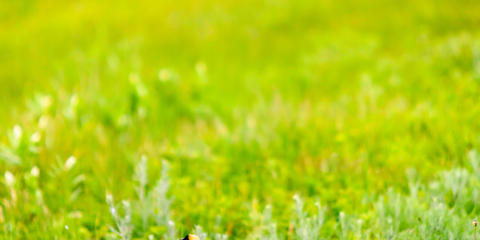
Grassland birds are disappearing in the northeastern U.S. This decline is largely due to hayfield mowing during the weeks that birds like Bobolinks are actively nesting. New England's working farmers, in particular, face financial pressures that force them to mow earlier and more frequently. To protect these grassland birds we must develop new strategies for promoting conservation on private farms.
The Bobolink Project uses donated funds to provide financial assistance to participating farmers who modify their mowing schedules so that grassland nesting birds can successfully raise their young. The Bobolink Project is a proven approach that can protect birds and farms.
Eligibility
What criteria are used to select fields for enrollment?
Answering this question revolves around looking at your farm from the standpoint of a Bobolink. Some fields have greater value to nesting grassland birds than others, so the process of selecting potential Bobolink Project fields begins by ranking fields offered by farmers and selecting those which are most biologically suitable for nesting grassland birds. For those farms which meet the following biological criteria, we then look at the financial aspects of the submitted bid
Here are the biological criteria that we look for when evaluating an application.
Acreage
Fields have to have at least 20 acres of continuous grassland. As field size increases, the abundance and diversity of grassland species increases as well. Twenty acres is typically recognized as the minimum acreage that can reliably support Bobolink populations. Fields that are over 50 acres will have higher Bobolink abundances, and fields over 75 acres in size may have Eastern Meadowlarks. Note that the field size is based on acres of grassland; hence, a 20-acre farm that includes 2 acres of row crops plus farm buildings would not be considered as a potential Bobolink Project farm. Farmers who have been previously accepted into The Bobolink Project with bids of less than 20 acres and who have had Bobolinks on their submitted fields will still be considered.
Vegetation Composition
Bobolinks and eastern meadowlarks thrive in fields that are composed of approximately 75% grass and 25% forbs like birds foot trefoil and clover. Reed canary grass forms dense monocultures that are unsuitable for bobolinks. Other non-grassy plant species that spread aggressively in fields, such as poison parsnip, yellow rattle, smooth bedstraw, spotted knapweed and buttercup significantly decrease nesting density and nesting success of grassland birds.
Surrounding Landscape
Fields that are in a landscape with other nearby fields are preferred over fields that are mostly surrounded by forest or suburban development. While isolated fields (especially large ones) are sometimes occupied by grassland birds, fields that occur in landscapes where there are other fields are generally preferred. We define ‘openness’ as how visually open a habitat appears. In other words, if you are standing in your field, how far can you see the horizon at the eye level. Recent research has found that openness within a 2.5km radius of a field increases the probability of Bobolinks and Eastern Meadowlarks to use a field .
There may be circumstances where neighboring farmers may want to identify a shared area to submit for inclusion in The Bobolink Project. In the example to the right, farms Blue, Orange, and Green are, on their own, below The Bobolink Project's acreage requirement (11 acres, 10 acres, and 6 acres respectively). However, if these three farmers submitted a joint bid, totaling 27 acres, all three farms would be eligible for inclusion in The Bobolink Project. Under these circumstances, a single bid would be submitted, but the landowners would each be paid for their respective acreage. If each landowner needs varying levels of compensation per acre to be able to participate, please reach out to the Bobolink Project coordinators at bobolinkproject@massaudubon.org.
Presence of Grassland Species
New fields that apply to the program should currently support Bobolink populations, which will be confirmed through eBird records, landowner confirmation, or referrals from volunteers, partners, and local birding groups. Our team members will visit fields each year during the breeding season to count the number of females in each field, which will help us to estimate each field’s breeding population and track changes over time. If Bobolinks are not present in a field for two consecutive years, the field will be ineligible for the program until the habitat improves.
Shape
Fields that are square, circular, or ovular in shape (green) are preferred over fields shaped as rectangles, complex shapes with lots of "edge", or fields that are separated from each other by hedgerows or large roads (suitability depends on nature of the barrier fragmenting the fields). Edge habitats (including tree lines that cut into fields) can expose grassland birds to a variety of predators, so grassland birds tend to avoid long and narrow fields. Field such as these will generally not be considered for inclusion in The Bobolink Project, but if they are large enough, we can accept the portion of the field that meets our criteria.
Important Considerations
-
Your submitted bid should be reasonable, but sufficient to sustainably maintain your fields while adhering to one of our two haying timelines.
-
Remember that your bid can focus on a piece of your total farm acreage. If you own a 200-acre farm, you may only be interested in enrolling 20 acres of your property into The Bobolink Project. Your bid, therefore, would cover only that 20-acre portion, not the entire 200 acres.
-
If two properties have comparable habitat quality, preference will be given to the one with the lower bid.
-
While there is no guarantee of continued enrollment, preference will be given to former Bobolink Project fields that supported Bobolinks or other grassland birds in previous years. Bobolinks have a high degree of nest-site fidelity, meaning that many will return to the same field they used in the prior year. Therefore, if a selected Bobolink Project field had nesting grassland birds in 2022, it is likely that the field will have nesting grassland birds in 2023.
-
If you have concerns about the forage quality of a particular field, you can choose to rotate the field in and out of the program. Some sources recommend haying intensively once every three years to prevent the spread of invasive plants that decrease habitat and forage quality. When rotating a field out, you can choose to enroll an adjacent field that supports Bobolinks, as it will protect the ones that spill over from the hayed field. Coordination among neighbors who are enrolled in the program can help to support this model.
Terms
Applicants will submit bids for the amount they wish to be paid to leave their fields fallow for Bobolink Habitat. For a full explanation of the bidding process, see this page.
Application Instructions
Complete the application online at this portal.
Resources
Related Programs
ACRE3 Agricultural Energy Efficiency
Colorado Department of Agriculture
- Grant
- Cost Share
- Loan
- Alternative Energy
- Conservation
- Irrigation
- Storage
- Greenhouse
- CO
- Any
ACRE3 Irrigation Hydropower Programs
Colorado Department of Agriculture
- Grant
- Cost Share
- Loan
- Hydro Power
- Alternative Energy
- Irrigation
- Conservation
- Water Management
- Equipment
- CO
- Any
Agricultural Conservation Easement Program: Agricultural Land Easements (ACEP-ALE)
Natural Resources Conservation Service
- Easement
- Cost Share
- Conservation
- Waterway Protection
- Water Quality
- Wildlife & Pollinator Habitat
- Education
- Recreation
- Wetland Conservation
- National
- Any
Agricultural Conservation Easement Program: Wetland Reserve Easements
Natural Resources Conservation Service
- Easement
- Cost Share
- Conservation
- Waterway Protection
- Water Quality
- Wildlife & Pollinator Habitat
- Education
- Recreation
- Wetland Conservation
- National
- Any
Details
Organization
Financial Instrument
Easement
Updated January 27, 2026
Image Credit: Ning Shi
This information was gathered from public sources. Ambrook is not responsible for or able to affect the results of any financial programs listed, nor are they responsible for any incorrect information that is listed or is on the hyperlinked external sites. All information is subject to change.
Explore hundreds more programs on Ambrook.